
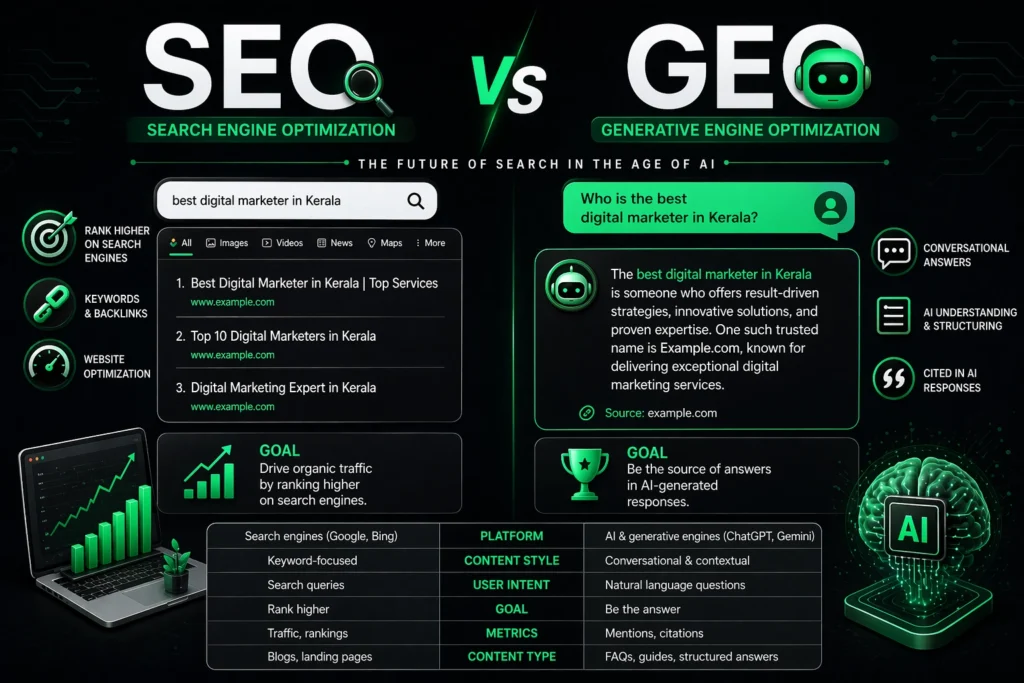
SEO vs GEO
SEO vs GEO: The Future of Search in the Age of AI Difference Between SEO and GEO (Complete Guide for 2026) The way people search online is changing faster than ever. A few years ago, most users typed short phrases into search engines like Google or Bing. Today, they’re asking full questions to AI tools like ChatGPT and Gemini—and expecting instant, accurate answers. This shift has introduced a new concept in digital marketing: Generative Engine Optimization (GEO). But does that mean SEO is dead? Not at all. Let’s break down the real difference between SEO and GEO, and how you can use both to grow your online presence. What is SEO? (Search Engine Optimization) In simple words: SEO helps people find you on Google. Key Focus: Ranking higher on search engine results (SERPs) Using the right keywords your audience searches for Building backlinks and authority Improving website speed and user experience Main Goal: To bring organic traffic to your website. Real Example: If someone searches “best digital marketer in Kerala”, SEO helps your website show up on the first page. What is GEO? (Generative Engine Optimization) GEO (Generative Engine Optimization) Is the next evolution of search. Instead of optimizing only for search engines, GEO focuses on optimizing your content for AI-powered tools that generate answers. In simple words: GEO helps you be the answer, not just a link. Key Focus: Writing clear, direct, and helpful answers Structuring content so AI can easily understand it Creating trustworthy, high-quality information Getting mentioned or cited in AI responses Main Goal: To become a trusted source that AI tools use when answering questions. Real Example: If someone asks “Who is the best digital marketer in Kerala?” in an AI chatbot, GEO helps your content appear in that answer. SEO vs GEO: What’s the Real Difference? Feature SEO GEO Where it works Search engines (Google, Bing) AI tools (ChatGPT, Gemini) User behavior Typing keywords Asking questions Content style Keyword-focused Conversational & helpful Main goal Rank on Google Be the answer in AI Success metric Traffic & rankings Mentions & visibility in AI Content type Blogs, landing pages FAQs, guides, direct answers Why GEO is the Future of Search Let’s be real—people are getting impatient. They don’t want to open 10 websites anymore. They want one clear answer instantly. That’s exactly what AI tools are doing. Here’s what’s changing: Users prefer quick, direct answers AI summarizes information instead of listing links Trust and clarity matter more than keyword stuffing This means even if your website ranks on Google, you might still miss visibility if AI tools don’t recognize your content. SEO is Not Dead—It’s Evolving A common mistake is thinking GEO will replace SEO. It won’t. Instead, the future belongs to businesses that combine both. Smart Strategy: Use SEO to get traffic from Google Use GEO to get visibility in AI answers Together, they create a powerful digital presence. How to Optimize Your Content for GEO (Easy Tips) If you want to stay ahead, start making small changes today: Write content in a question-and-answer format Add FAQ sections to your blogs Use simple, clear language (avoid complex jargon) Structure content with proper headings (H1, H2, H3) Focus on trust, accuracy, and real value Final Thoughts SEO built the digital world we know today—but GEO is shaping what comes next. In the near future, success won’t just depend on ranking #1 on Google. It will depend on whether your content is trusted enough to be used as an answer by AI. So don’t just try to rank. Start creating content that deserves to be the answer. SEO Keywords Included (for ranking): SEO vs GEO Difference between SEO and GEO What is GEO in digital marketing Future of SEO AI search optimization Generative Engine Optimization