
Ads Integrated Inside AI Search & Conversational Interfaces: The Future of Digital Advertising
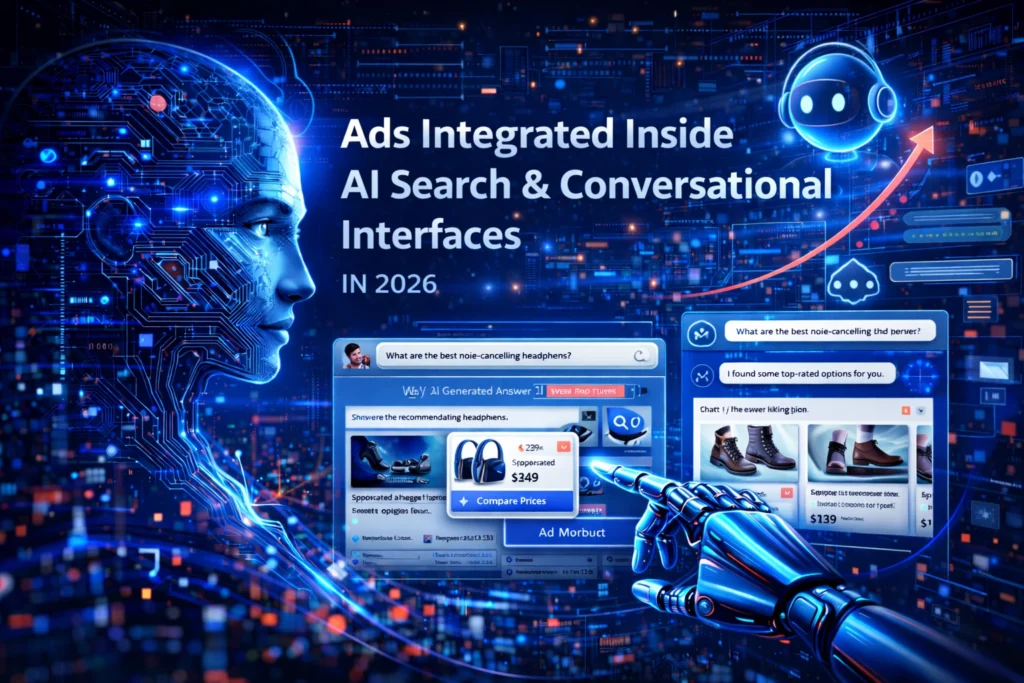
Digital advertising is entering a transformative phase as artificial intelligence reshapes how users search, interact, and make decisions online. By 2026, traditional search engine result pages are no longer the primary destination for user discovery. Instead, AI-powered search engines and conversational interfaces deliver direct answers, recommendations, and insights—often within a single, fluid interaction. In this new ecosystem, advertising has evolved from static placements into contextual, conversational, and AI-integrated experiences.
Ads integrated inside AI search and conversational interfaces represent a fundamental shift in how brands reach audiences. Rather than interrupting the user journey, these ads are designed to blend seamlessly into AI-generated responses, offering value-driven, intent-aligned solutions at the exact moment users need them.
The Evolution from Search Ads to AI-Integrated Ads
For years, digital advertising revolved around keywords, bidding, and visible ad slots. Ads appeared above or alongside organic results, clearly separated from informational content. While effective, this model depended on users clicking links and navigating multiple pages.
AI-powered search changes this entirely. Modern AI systems interpret intent, understand context, and generate synthesized responses that summarize the best available information. In many cases, users receive answers without ever clicking a website. This shift has given rise to zero-click experiences, where visibility matters more than traffic volume.
To adapt, advertising has moved inside these AI-driven experiences. Ads are no longer just placements—they are recommendations, suggestions, and contextual enhancements within conversations.
What Are AI Search & Conversational Interfaces?
AI search and conversational interfaces include:
- AI-powered search engines that generate summaries and answers
- Conversational assistants embedded in search platforms
- Shopping and discovery chats driven by AI
- Voice assistants and multimodal AI interfaces
These systems engage users through natural language, responding to questions like a human assistant would. Ads integrated into these environments must match this conversational tone while delivering relevance and trust.
How Ads Are Integrated into AI Search Experiences
1. Contextual Recommendations
Rather than showing a traditional ad, AI systems introduce sponsored content as contextual suggestions. For example, when a user asks about the best tools, services, or products, AI may recommend options that include paid placements—clearly labeled but naturally embedded within the response
2. Conversational Ad Placement
In conversational interfaces, ads appear as part of the dialogue. Instead of banners or text ads, the AI might say:
“Based on your needs, this solution could help,”
followed by a sponsored recommendation.
This format feels less intrusive and more helpful, increasing engagement and trust.
3. Personalized Ad Responses
AI systems use behavioral data, preferences, and real-time context to deliver hyper-personalized ad experiences. Ads are tailored to:
- User intent
- Location
- Past interactions
- Device and time of day
This makes ads feel relevant rather than generic.
Why This Advertising Model Is Powerful
Intent-Driven Exposure
AI-integrated ads appear only when they are relevant to the user’s question or need. This reduces wasted impressions and increases conversion potential.
Native & Non-Intrusive
Because ads are embedded in AI-generated responses, they do not disrupt the user experience. Instead, they enhance it by offering solutions.
Higher Trust & Credibility
When AI systems recommend or reference a brand, users often perceive it as more credible than a traditional ad. Trust becomes a key performance factor.
Impact on Advertisers and Brands
Shift from Keywords to Context
Advertisers must move beyond keyword targeting and focus on intent modeling, contextual relevance, and conversational alignment.
Creative Optimization
Ad creatives must be designed for conversation:
- Clear, concise messaging
- Value-focused copy
- Natural language tone
- Problem-solving approach
Static ads give way to dynamic, AI-adaptable content.
Measurement and Performance Metrics
Traditional metrics like clicks and impressions are no longer enough. In AI-integrated advertising, success is measured by:
- Engagement within AI conversations
- Brand visibility in AI responses
- Assisted conversions
- Influence on decision-making
Advertisers must adopt new attribution models that reflect AI-driven journeys.
Challenges in AI-Integrated Advertising
Transparency and Disclosure
Clear labeling of sponsored content is essential to maintain trust. Users must know when a recommendation is paid.
Brand Safety
Ads must align with the AI’s tone, values, and context. Misalignment can harm brand perception.
Reduced Control
Advertisers give up some control to AI systems, making strategic input and high-quality data more important than manual adjustments.
Opportunities for Early Adopters
Brands that adapt early gain:
- First-mover advantage in AI environments
- Stronger brand authority and recall
- Higher-quality leads driven by intent
Businesses that treat AI as a partner rather than a platform will outperform competitors.
The Role of Google Ads and Other Platforms
By 2026, platforms like Google Ads integrate deeply with AI search experiences. Ads appear within:
- AI-generated summaries
- Conversational shopping results
- Voice search answers
Advertisers provide assets, data, and strategic goals, while AI systems determine placement, timing, and format.
The Future of Advertising in AI Search
The future of digital advertising is assistive, adaptive, and intent-led. AI search and conversational interfaces are redefining how users discover products and services. Ads will no longer compete for attention—they will earn relevance through usefulness.
Brands that succeed will focus on:
- User-first value
- Authentic messaging
- Trust and transparency
- AI-aligned optimization strategies
Conclusion
Ads integrated inside AI search and conversational interfaces represent the next evolution of digital advertising. As AI becomes the primary gateway to information and discovery, advertising must evolve from interruption to assistance. In this new era, relevance outweighs reach, context matters more than clicks, and trust becomes the ultimate currency.
For marketers, this shift is not a threat—it is an opportunity to build deeper, more meaningful connections with audiences by showing up exactly when it matters most.